
Sodium dodecyl sulfate (SDS), also known as sodium lauryl sulfate (SLS), is a widely used anionic surfactant with applications spanning from household cleaning products to laboratory and medicinal uses. Its amphiphilic nature—possessing both hydrophilic and hydrophobic properties—makes it effective in solubilizing fats and oils, thereby serving as a powerful detergent.
Key Properties of SDS
SDS is an organic compound with the chemical formula C12H25O4SNa. It consists of a 12-carbon hydrophobic tail attached to a hydrophilic sulfate group, granting it the ability to reduce surface tension in aqueous solutions and form micelles. These properties are essential for its role as a surfactant in various applications.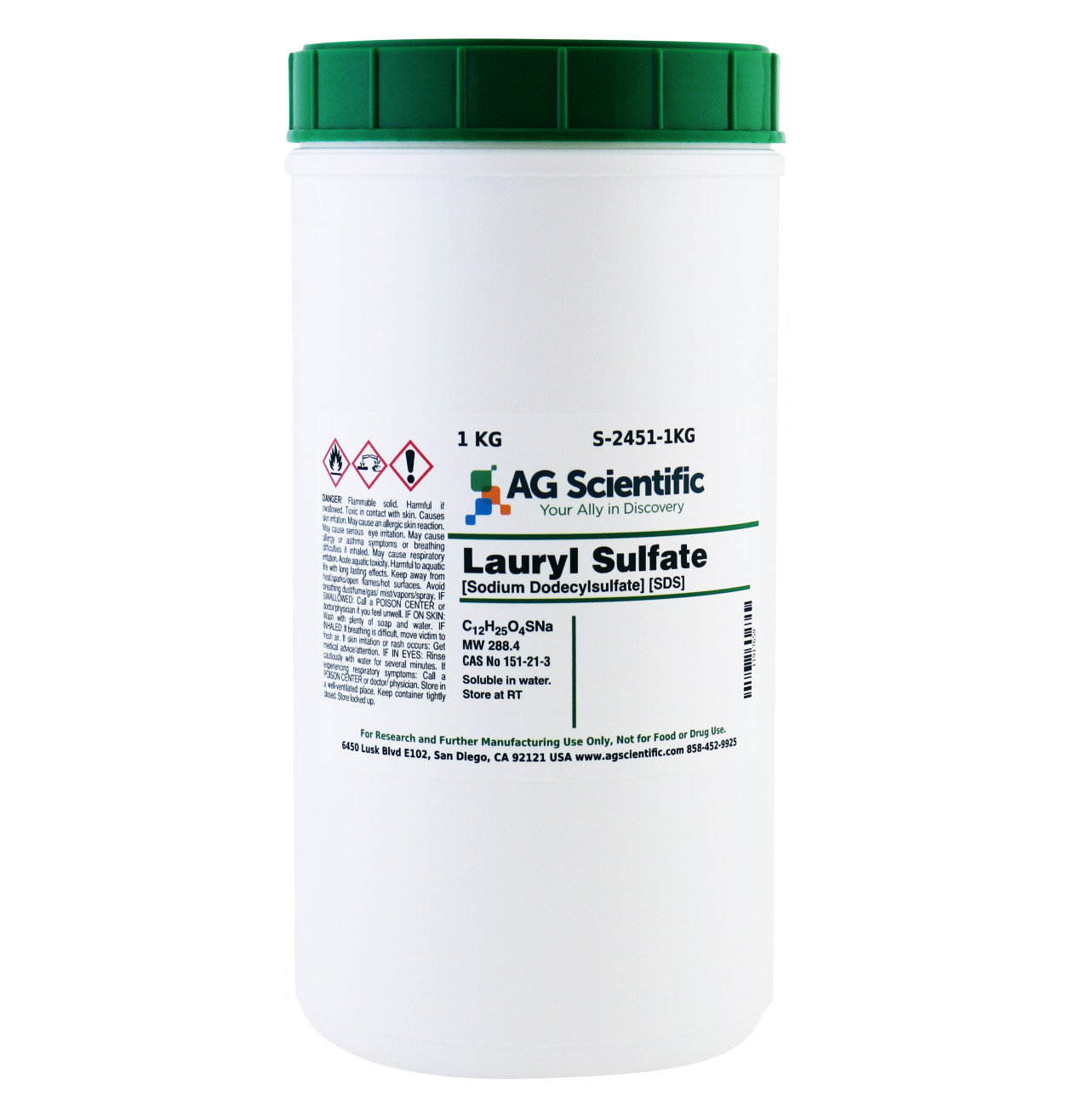
Laboratory Applications of SDS
In biochemical and molecular biology laboratories, SDS is indispensable due to its protein-denaturing capabilities. It is a key component in SDS-PAGE (sodium dodecyl sulfate-polyacrylamide gel electrophoresis), a technique used to separate proteins based on their molecular weight. By disrupting non-covalent bonds, SDS linearizes proteins and imparts a uniform negative charge, allowing for their effective separation during electrophoresis. Additionally, SDS is utilized in cell lysis protocols to extract DNA and RNA, as it disrupts cell membranes and denatures proteins, facilitating the release of nucleic acids.
Medicinal Applications of SDS
In the pharmaceutical industry, SDS serves multiple roles. It acts as an excipient in tablet and capsule formulations, enhancing the solubility and bioavailability of active pharmaceutical ingredients. SDS is also employed in topical and transdermal formulations as an emulsifier and penetration enhancer, aiding in the delivery of drugs through the skin barrier. Furthermore, it is used in injectable formulations to improve the solubility and stability of hydrophobic drugs.
Note: AG Scientific does not sell SDS for medicinal use.
Safety and Handling Guidelines
While SDS is effective in various applications, it requires careful handling due to its potential to cause skin and eye irritation. Prolonged exposure can lead to dermatitis in sensitive individuals. It is advisable to use personal protective equipment, such as gloves and safety goggles, when handling SDS. In case of contact with skin or eyes, affected areas should be rinsed thoroughly with water.
How is Sodium Dodecyl Suflate produced?
SDS is synthesized by treating lauryl alcohol with sulfur trioxide gas, oleum, or chlorosulfuric acid to produce hydrogen lauryl sulfate.The trioxide gas method is the typical method used at the industrial level. The resulting product is then neutralized through the addition of sodium hydroxide or sodium carbonate.
Comparison with Other Surfactants
SDS is one of the most researched anionic surfactants and is known for its strong detergent properties. Compared to non-ionic surfactants like Triton X-100, SDS is more effective in denaturing proteins, making it preferable for applications requiring complete protein unfolding. However, its potential for irritation is higher than that of milder surfactants, necessitating careful consideration based on the intended application.
Frequently Asked Questions
What is the primary function of SDS in SDS-PAGE?
SDS denatures proteins by disrupting non-covalent bonds and imparts a uniform negative charge, allowing proteins to be separated based on size during electrophoresis.
Can SDS be used in food products?
Yes, SDS is considered safe for use as a food additive and is used as an emulsifying agent and whipping aid in certain food products.
Is SDS biodegradable?
SDS is biodegradable under aerobic conditions, but its degradation rate can vary depending on environmental factors.
How should SDS be stored?
SDS should be stored in a cool, dry place, away from incompatible substances, and in a tightly sealed container to prevent moisture absorption.
What precautions should be taken when disposing of SDS?
SDS solutions should be disposed of in accordance with local regulations. It is advisable to neutralize the solution and consult material safety data sheets (MSDS) for proper disposal methods.
For more information or to request SDS samples, please contact our experts or request a quote.
Additional Reading
- Tips for Selecting Biological Detergents
- Detergents: Important Tools for Membrane Protein Purification
- Sulfobetaines, Zwitterionic Biodetergents in Diagnostics