
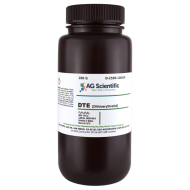
Dithiothreitol (DTT), also known as Cleland's reagent, is a potent reducing agent widely utilized in biochemical and molecular biology applications. Its primary function is to reduce disulfide bonds in proteins and peptides, thereby preventing the formation of intramolecular and intermolecular disulfide linkages between cysteine residues. This property is essential for maintaining protein stability and function during various experimental procedures.
Mechanism of Action of DTT
DTT operates through thiol-disulfide exchange reactions. It possesses two thiol (-SH) groups that can donate electrons to disulfide bonds (S-S) in proteins, reducing them to free thiol groups. This reduction process typically involves two sequential reactions:- Formation of a mixed disulfide intermediate between DTT and the target disulfide bond.
- Intramolecular cyclization of DTT, resulting in a stable six-membered ring and the release of the reduced protein.
Key Applications of DTT in Protein Chemistry
DTT is indispensable in protein chemistry for several applications:- Protein Denaturation for Electrophoresis: In sodium dodecyl sulfate-polyacrylamide gel electrophoresis (SDS-PAGE), DTT is used to reduce disulfide bonds, ensuring proteins are fully denatured and can be separated based on their molecular weight.
- Enzyme Activity Preservation: By maintaining cysteine residues in their reduced state, DTT helps preserve the catalytic activity of enzymes that are sensitive to oxidation.
- Preventing Protein Aggregation: DTT prevents the formation of disulfide-linked aggregates, which is crucial during protein purification and storage.
- RNA Isolation: DTT is used to inactivate ribonucleases by reducing their disulfide bonds, thereby protecting RNA integrity during extraction procedures.
Comparison: DTT vs Other Reducing Agents
When selecting a reducing agent, it's important to consider factors such as reducing strength, stability, and volatility.- DTT vs β-Mercaptoethanol (BME): Both agents are effective in reducing disulfide bonds. However, DTT is generally preferred due to its stronger reducing power and lower volatility, which results in less unpleasant odor compared to BME. Additionally, DTT's cyclic disulfide form provides a more stable reduction environment.
- DTT vs Tris(2-carboxyethyl)phosphine (TCEP): TCEP is a more stable reducing agent that is effective over a broader pH range, including acidic conditions where DTT is less effective. However, TCEP is bulkier and may reduce cystines in folded proteins more slowly than DTT.
Storage, Handling, and Safety Considerations
Proper storage and handling of DTT are crucial to maintain its reducing efficacy:- Storage: Store DTT powder in a desiccated environment at -20°C. Prepare fresh aqueous solutions immediately before use, as DTT solutions are prone to oxidation.
- Handling: Minimize exposure to air and light during preparation and use. Use appropriate personal protective equipment, including gloves and eye protection, to prevent skin and eye irritation.
- Safety: DTT can cause irritation upon contact with skin or eyes and may be harmful if ingested or inhaled. Ensure work is conducted in a well-ventilated area, and follow all relevant safety protocols.
Pricing and Sourcing DTT
DTT is available in various quantities to suit different laboratory needs. For instance, AG Scientific offers DTT in the following sizes:- 5 g: $33.25
- 10 g: $56.25
- 25 g: $100.00
- 100 g: $280.00
- 1 kg: $1,742.25
Frequently Asked Questions
Q: Can DTT be used in all pH conditions?A: DTT is most effective at pH values above 7. Its reducing power diminishes in acidic conditions due to the protonation of thiol groups.
Q: How should DTT solutions be prepared and stored?
A: Prepare fresh DTT solutions immediately before use to ensure maximum reducing activity. Store the powder at -20°C in a desiccated environment.
Q: Is DTT suitable for all protein reduction applications?
A: While DTT is effective for many applications, its performance can be limited in acidic conditions. In such cases, alternative reducing agents like TCEP may be more appropriate.
For more detailed information and to explore our range of reducing agents, download our comprehensive DTT application guide or contact our technical experts for tailored solutions.
Citations featuring AG Scientific's DTT
- Breeding with rare defective alleles (BRDA): a natural Populus nigra HCT mutant with modified lignin as a case study
- Development of functional amino acid-based star polymers
- The α-proteobacteria Wolbachia pipientis protein disulfide machinery has a regulatory mechanism absent in γ-proteobacteria